
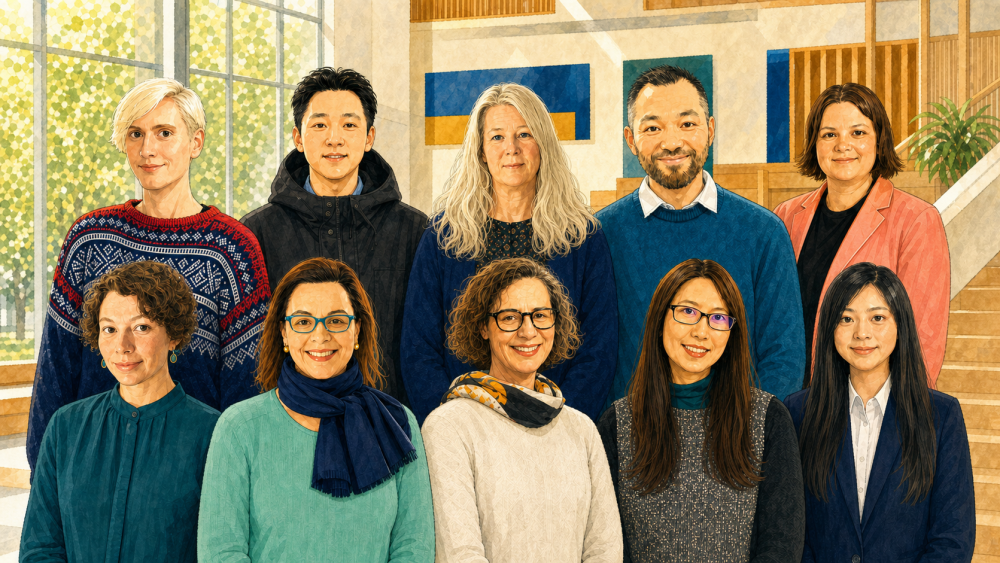
On 18–19 August 2026, AMICA partners met at Forum Medicum, Lund University, for the project’s first in-person consortium meeting. Across two half working days, the meeting covered all six work packages and addressed a shared challenge: how can AI-enabled home care be studied across different welfare systems without losing sight of the people, relationships and institutions that make care possible?
AMICA (AI for Mindful Care and Aging: Navigating vulnerability in the use and implementation of automated home care) is a four-year research collaboration funded by NordForsk. Led by Lund University, it brings together Tallinn University of Technology (TalTech), Norwegian University of Science and Technology (NTNU) and the University of Eastern Finland. The project examines how vulnerability is constructed, negotiated, and practiced in using and implementing AI-automated home care in Estonia, Finland, Norway, and Sweden. To build that fuller picture, AMICA connects policy and regulation with perspectives from innovation leaders and technology providers, older adults and care workers.
A shared method for cross-country comparison
One major focus in Lund was WP1’s institutional and policy work. The team is developing a catalogue of national and municipal documents – from laws and policies to procurement records, pilots, service deployments and administrative decisions – to examine how AI-enabled home care is governed and represented. At the meeting, the WP1 team worked to align a proposed process for identifying, recording, coding and interpreting evidence.
The programme also focused on AMICA’s planned research with innovation leaders, older adults and care workers. WPs 2-4 brought draft interview guides to the meeting for review and refinement.
From alignment to fieldwork
Next steps combine continued preparation with interview guides, ethics applications, and analysis. Protocols will support comparison while national teams adapt language and interpretation to local institutional contexts. The Lund meeting brought progress and next steps across all work packages into a shared discussion.
